Sosoactive
The internet has become one of the most important places to find information, learn about unfamiliar subjects, discover useful resources, and keep up with changing digital trends. With so much information available online, however, finding content that is organized, understandable, and genuinely useful can sometimes be challenging. This is where informational websites and independent blogs can provide value.
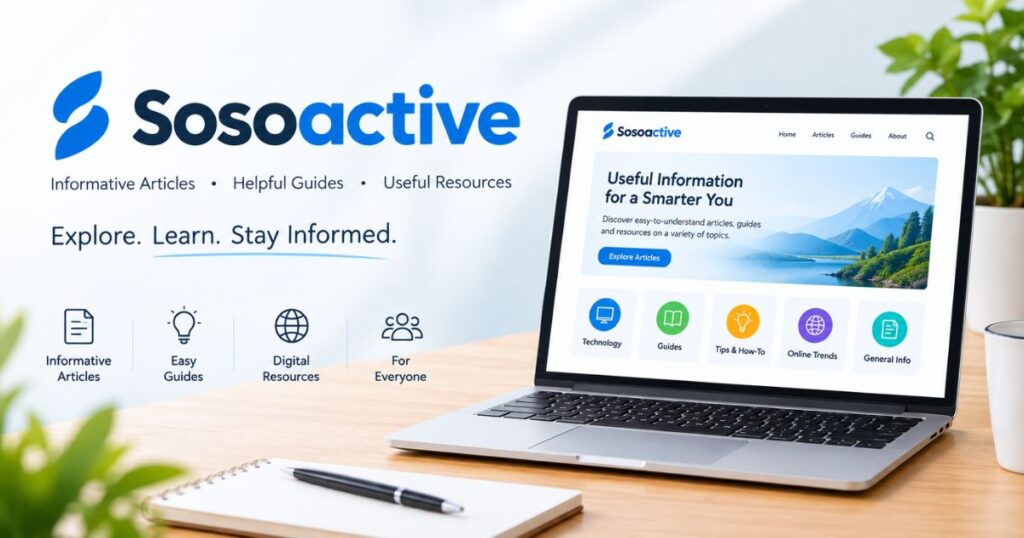
Sosoactive is an informational blog designed to provide readers with accessible content across a variety of topics. Instead of limiting itself to one narrow subject, the website aims to publish useful articles, explanations, guides, tips, and general-interest resources for people who use the internet to research different subjects.
This guide explains what Sosoactive is, the type of content readers can find on the website, how informational blogs work, what makes useful online content, and what readers should consider when using information found on the internet.
What Is Sosoactive?
Sosoactive is an online informational website that publishes articles covering different subjects and areas of interest. The website is designed for readers who want straightforward explanations and useful information without having to navigate through overly complicated material.
The idea behind Sosoactive is relatively simple: provide organized online content that helps visitors understand topics they may be researching. Articles can include explanations, beginner-friendly guides, practical information, digital topics, internet trends, and other general-interest subjects.
Rather than assuming that every reader already understands a particular topic, informational content can introduce important concepts from the beginning. This makes a website such as Sosoactive potentially useful for both people discovering a subject for the first time and readers who simply want a quick refresher.
Understanding the Sosoactive Website
An informational website typically consists of multiple articles organized around different subjects and search queries. Each article can address a specific question, explain a concept, or provide useful background information.
Readers may encounter different types of content while exploring Sosoactive, including:
- Informational articles
- Beginner guides
- How-to resources
- Technology-related topics
- Internet and digital trends
- General-interest content
- Explanatory articles
- Frequently asked questions
- Practical tips and resources
The purpose of these different formats is to make information easier to consume and help readers find content that matches their particular interests.
What Type of Content Does Sosoactive Publish?
One of the defining characteristics of a general informational blog is the variety of subjects it can cover. Sosoactive is not restricted to a single category, allowing the website to explore different topics that may be relevant to modern internet users.
The exact subjects published on an informational website can change over time as interests, technologies, and online trends develop. This flexibility allows new topics to be introduced while older articles can be updated when appropriate.
Informational Guides
Guides are an important type of online content because they provide readers with information in a structured format. A good guide generally begins with basic concepts before moving toward more specific details.
For example, a beginner who encounters an unfamiliar website, technology, or online concept may need an explanation of what it is, how it works, and what important things to know. A well-structured guide can answer these questions in a logical sequence.
Educational and Explanatory Articles
Explanatory articles focus on helping readers understand a particular subject rather than simply providing a short definition.
Such articles may discuss:
- Important terminology
- Background information
- Common questions
- Advantages and limitations
- Practical considerations
- Related concepts
- Frequently misunderstood points
This format can be especially useful when a topic has several different aspects that cannot be explained effectively in a single sentence.
Why Informational Websites Matter
The amount of information available online continues to grow. Search engines can return millions of results for a single query, but quantity does not necessarily mean quality or usefulness.
Readers often need information that is organized around their actual questions. An informational blog can help by presenting a topic in a structured format rather than requiring visitors to piece together information from many unrelated sources.
Another advantage is accessibility. Complex subjects can often be explained using simpler language, headings, examples, and lists. This makes information easier to scan and understand, particularly for readers who are unfamiliar with the subject.
Sosoactive and Online Information
The modern internet is constantly changing. New websites, platforms, technologies, trends, and digital services appear regularly, while existing ones can change their features and policies.
For this reason, online information should always be considered in context. Something that was accurate several months ago may need updating today, particularly when it concerns rapidly changing digital services.
Sosoactive's role as an informational blog is therefore connected to the broader process of helping readers discover and understand online topics. Articles can serve as starting points for research while encouraging readers to consider additional sources when more authoritative information is required.
The Importance of Current Information
Keeping online content current is particularly important for subjects involving:
- Technology
- Websites and online platforms
- Digital services
- Internet trends
- Software
- Online privacy
- Security practices
- Changing regulations
Readers should always check whether information remains applicable, especially when an article discusses something that changes frequently.
How to Use Sosoactive as an Information Resource
Visitors can approach Sosoactive in several different ways depending on what they need. Some may arrive through a search engine after asking a specific question, while others may browse articles and discover subjects they were not previously familiar with.
A useful approach is to first identify the main question you want answered. Once you find a relevant article, review the headings and sections to determine whether it addresses your particular concern.
Search for Specific Topics
Using a specific search phrase can make it easier to locate relevant information. Instead of searching for a very broad concept, consider using a more precise query.
For example, readers might search for:
- A definition of a particular term
- An explanation of an online service
- A beginner's guide
- Information about a digital trend
- Common questions about a website
- General online safety information
The more specific the question, the easier it generally becomes to identify relevant content.
Read Beyond the Introduction
Although introductions provide useful context, important information is often distributed throughout an article. Readers should review relevant headings, examples, lists, and FAQs before reaching a conclusion.
If a topic has practical or financial consequences, online articles should generally be treated as informational resources rather than substitutes for professional advice.
Sosoactive for Beginners
Beginners often have different information requirements from experienced users. Someone encountering a new concept for the first time may not understand technical terminology or know which aspects of a subject are important.
Beginner-friendly content solves this problem by introducing concepts gradually. Instead of assuming advanced knowledge, it explains the basic terminology and provides context before moving into more detailed information.
Simple Explanations for New Readers
A clear article should answer fundamental questions such as:
- What is the subject?
- Why is it relevant?
- How does it generally work?
- What should beginners know?
- What common questions do people have?
- Where can additional information be found?
This structure allows readers to build their understanding step by step.
For Sosoactive, maintaining an accessible writing style can help make informational content useful to a wider audience. Clear language does not mean removing important details; rather, it means presenting those details in a way that is easier to understand.
Exploring Digital and Technology Topics
Technology has become part of everyday life, from smartphones and computers to online services and digital platforms. As technologies evolve, people frequently search for explanations of new tools, websites, features, and concepts.
Technology-related content can therefore be valuable when it provides practical context rather than simply repeating technical terminology.
Topics Internet Users Commonly Research
Online users frequently look for information about:
- Websites and online platforms
- Mobile applications
- Internet services
- Digital tools
- Software features
- Online accounts
- Privacy settings
- Security practices
- New digital trends
An informational article can help readers understand the basics before they decide whether a particular service or technology is relevant to them.
Online Safety and Responsible Internet Use
Using the internet effectively also means understanding basic online safety practices. Readers should be cautious when visiting unfamiliar websites, entering personal information, downloading files, or interacting with unknown services.
No single article can guarantee that a website or online service is safe. Users should evaluate information independently and look for trustworthy sources when security or privacy is involved.
Basic Online Safety Practices
Internet users can reduce common risks by following practical habits such as:
- Using strong and unique passwords
- Enabling two-factor authentication when available
- Keeping software updated
- Avoiding suspicious downloads
- Checking website addresses carefully
- Being cautious with unexpected messages
- Avoiding unnecessary sharing of personal information
- Reviewing privacy settings regularly
These practices are useful regardless of which informational website a person uses.
Sosoactive and Search-Friendly Content
Modern informational websites often organize content around questions people ask through search engines. This can make it easier for readers to discover relevant articles.
Search engine optimization, commonly called SEO, involves improving the structure and usefulness of web content so that search engines can better understand its subject.
However, effective SEO should not mean filling an article with repeated keywords. Natural language, useful information, logical organization, and a positive reader experience remain important.
Semantic Keywords and Related Topics
An article about Sosoactive can naturally include related terms such as:
- Sosoactive website
- Sosoactive blog
- online information
- informational website
- digital resources
- online guides
- internet users
- technology information
- educational content
- online trends
- useful resources
- how-to guides
- general information
These related terms help describe the broader subject without relying on repetitive exact-match keywords.
Why Content Structure Matters
The structure of an article can significantly affect how easily readers find the information they need. Long blocks of text can make even useful material difficult to read.
Headings, subheadings, paragraphs, bullet points, and FAQs allow readers to scan an article and quickly identify relevant sections.
A well-structured informational article may include:
- A clear introduction
- Background information
- Main topic explanations
- Practical guidance
- Related questions
- Important considerations
- Frequently asked questions
- A concise conclusion
This structure benefits both readers and search engines because the main subjects and relationships between topics are easier to identify.
The Role of FAQs on Sosoactive
Frequently asked questions are useful because readers often have short, specific questions about a topic. An FAQ section allows those questions to be addressed directly.
For example, someone searching for Sosoactive may simply want to know what the website is, what type of content it provides, or how they can use the information published there.
Common Questions About Sosoactive
What is Sosoactive?
Sosoactive is an informational website that publishes articles, guides, explanations, and general-interest content.
What type of information can I find on Sosoactive?
The website can cover various subjects, including digital topics, technology, online trends, guides, and general informational resources.
Is Sosoactive designed for beginners?
Much of the content can be approached by beginners because informational articles are structured to explain subjects in accessible language.
Can information on websites change over time?
Yes. Online services, technologies, policies, and trends can change, so readers should consider the date and context of information.
Should online articles be treated as professional advice?
Generally, informational articles should not replace qualified professional advice when a decision requires specialized expertise.
How Readers Can Evaluate Online Information
Not every piece of information published online has the same level of reliability. Readers should develop the habit of evaluating information rather than automatically accepting every statement they encounter.
When researching an unfamiliar topic, compare information from multiple reputable sources where appropriate. Official websites, documentation, recognized organizations, and qualified professionals can provide additional context.
Things to Check
Before relying heavily on information, consider:
- Who published the information?
- When was it published or updated?
- Does the article provide useful context?
- Are important claims supported by credible sources?
- Is the information consistent with authoritative sources?
- Could the subject have changed since publication?
These questions are especially important for technology, legal, financial, health, security, and other areas where outdated information can cause problems.
Building a Better Online Reading Experience
A successful informational website is not only about publishing articles. The overall reading experience matters as well.
Visitors should be able to navigate between relevant pages, understand what an article is about quickly, and find additional resources without unnecessary difficulty.
A clean website structure can include:
- Clear navigation menus
- Descriptive article titles
- Logical categories
- Internal links
- Search functionality
- Mobile-friendly pages
- Readable typography
- Clearly separated sections
These features can make it easier for visitors to explore a website and discover additional content.
Sosoactive on Mobile Devices
A large portion of internet activity takes place on smartphones and other mobile devices. This means informational websites need to consider mobile readers when presenting their content.
Mobile users generally benefit from responsive layouts, readable text, appropriately sized buttons, and content that does not require excessive horizontal scrolling.
Mobile-Friendly Content
Good mobile content should be:
- Easy to scan
- Divided into short sections
- Comfortable to read on smaller screens
- Supported by descriptive headings
- Free from unnecessary visual clutter
These principles help readers access Sosoactive and similar informational websites from different devices.
The Future of Informational Blogging
The online publishing environment continues to evolve. Search engines, artificial intelligence, social platforms, mobile technology, and changing user behavior are all influencing how people discover information.
Despite these changes, the fundamental need for useful information remains. People will continue to search for explanations, guides, definitions, comparisons, and practical resources.
For informational blogs such as Sosoactive, this creates an opportunity to focus on content that genuinely addresses reader questions and provides useful context.
Adapting to Changing Search Behavior
People increasingly use different methods to find information, including traditional search engines, social platforms, voice assistants, and AI-powered tools.
This means websites can benefit from creating content that is:
- Clearly written
- Well organized
- Factually responsible
- Relevant to real questions
- Easy to understand
- Supported by useful context
- Regularly reviewed when necessary
The goal should be to create resources that remain useful regardless of how readers initially discover them.
Why Sosoactive Can Be Useful for Online Readers
The main value of an informational blog is its ability to bring related information together in a format that is easier to consume.
Instead of approaching every subject as a highly technical research project, readers can use explanatory articles to establish a basic understanding before exploring more specialized resources.
Sosoactive aims to provide this type of accessible information through a range of articles and guides. Its broad informational approach means visitors may encounter content covering different aspects of the online world and general-interest subjects.
Final Thoughts on Sosoactive
Sosoactive is an informational blog focused on providing readers with accessible articles, explanations, guides, and general-interest resources. Its broad approach allows it to explore different subjects that may be relevant to people researching information online.
As with any online resource, readers should consider the date, context, and reliability of information before relying on it for important decisions. When a topic involves professional, legal, financial, medical, or security-related considerations, additional authoritative sources should be consulted.
The internet is constantly changing, and useful informational websites can help people keep up with that change. By organizing information into readable articles and practical guides, Sosoactive gives readers a starting point for learning more about different topics.